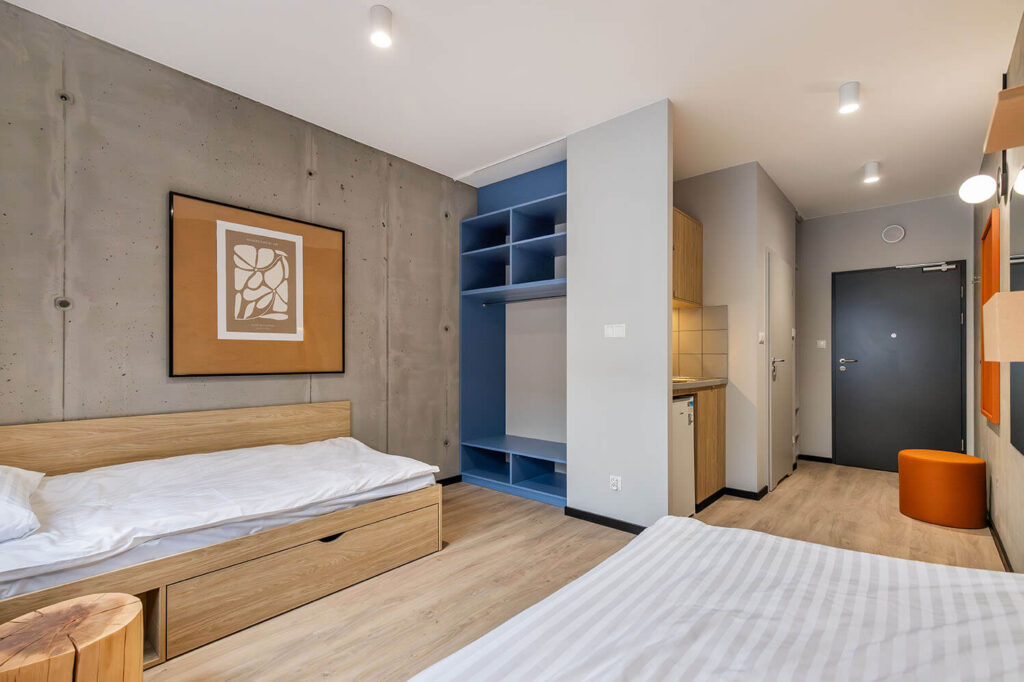
Student residences in large cities like Krakow are increasingly becoming miniature versions of the world. Students from Poland, Spain, Turkey, India, and Ukraine live side by side in one corridor. This is a huge opportunity, but also a challenge. How do you build relationships with people from other cultures?
Cultural differences – how to understand them and use them as an asset?
Each culture has its own patterns of behavior—how to speak, eat, express emotions, and use space. Someone from Asia might not look you in the eye during a conversation—not out of disrespect, but because it’s polite. A student from a Mediterranean country, on the other hand, might be more direct and loud. Not to dominate, but to show commitment. Understanding these differences instead of judging them is the first step to building healthy relationships.
Where to live while studying in Krakow? Check: https://nextdoor-housing.pl/gdzie-mieskac-podczas-studiow-w-krakowie/
Language Doesn’t Have to Be a Barrier – Effective Intercultural Communication
You don’t have to speak perfect English to communicate with someone from the other side of the world. All you need is a basic vocabulary, attentiveness, and the courage to speak up first. Too often, we wait for someone else to take that step – in an international dormitory, that’s a mistake.
Check out the best districts for students: https://nextdoor-housing.pl/krakow-dzielnice-najlepsze-dla-studentow/
Applications and tools supporting intercultural communication
If you feel uncertain, use technology to your advantage. Apps like Google Translate, Grammarly, or HiNative help you understand and formulate sentences. Platforms for shared activities are also useful, where you can create “dorm servers.” The most important thing is not to treat language as an excuse to isolate yourself.
Student housing? Check what you need to know: https://nextdoor-housing.pl/mieszkanie-dla-studenta-w-krakowie/
Organizing joint initiatives – cooking, games, trips
Cooking together is one of the easiest ways to break the ice. Everyone can bring something from their own country – spices, a recipe, a ritual. Board games or spontaneous nights out work similarly. You don’t have to do anything big – just suggest: “We’re making spaghetti on Friday, are you coming over?”
Check where it’s worth living while studying in Krakow: https://nextdoor-housing.pl/akademik-krakow/
Difficult situations and conflicts – how to resolve them with empathy?
Misunderstandings are inevitable – not because someone is malicious.
Examples of real challenges from the life of a student and ways to solve them
Case in point: A German student leaves his shoes in the middle of the room, while his Japanese roommate thinks it is rude.
Solution: Talk about differences in habits, establish common rules – e.g. a specific place for shoes, and compromise that both will adapt.
FAQ
How to overcome the language barrier in a dorm?
Use simple sentences, gestures, use apps.
How to avoid cultural misunderstandings in everyday life?
Observe, ask questions instead of judging, and don’t assume that someone is “doing something wrong” – they just might be doing it differently.
What to do if you don’t get along with your roommate from another country?
Try to talk calmly and without accusations, and if that doesn’t help, ask the dormitory administration for support.
What are the most common challenges in international student accommodation?
Differences in lifestyle, approach to cleanliness, noise and guests – but all can be resolved with conversation and compromise.
International Communities in Student Residences – How to Build Networks in a Multicultural Environment